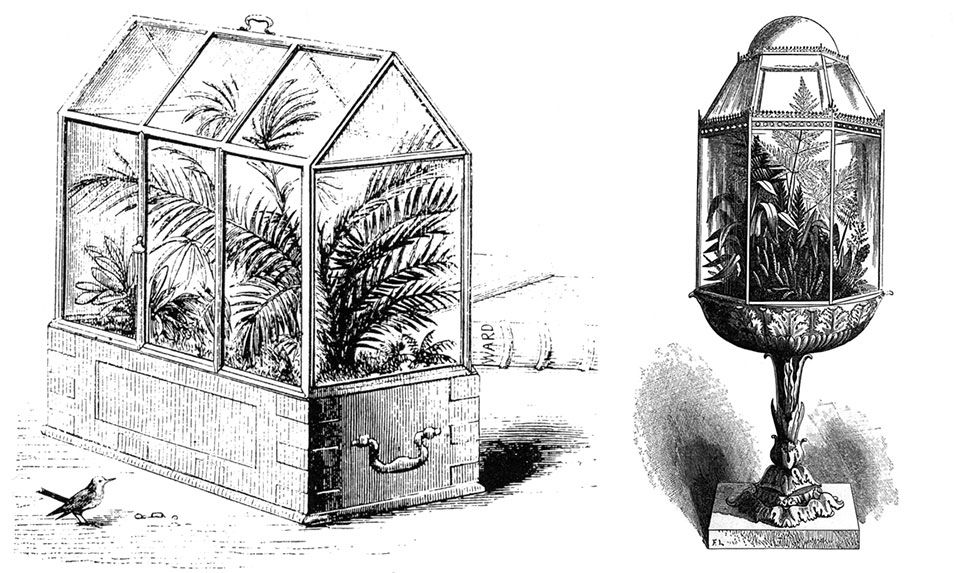
Wardian case
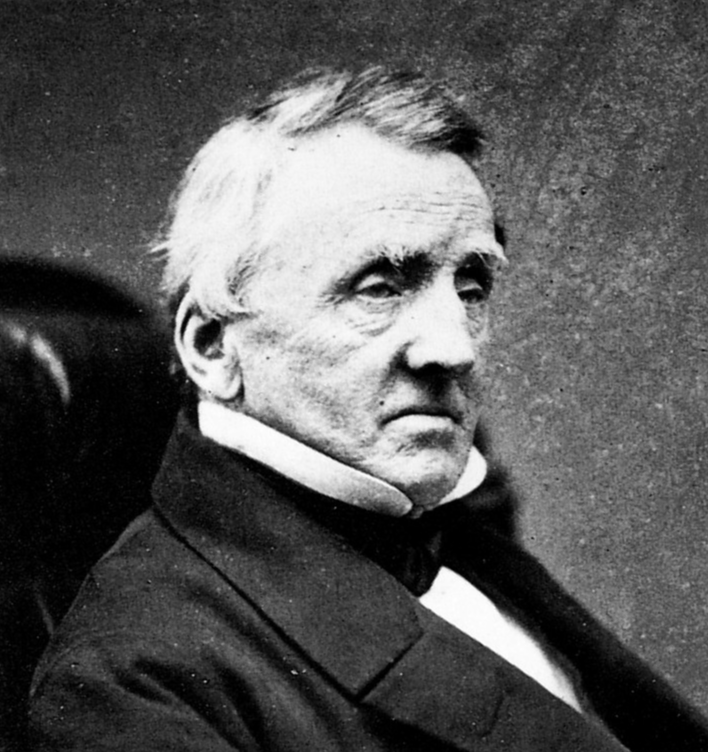
Nathaniel Bagshaw Ward (1791 – 4 June 1868 in St Leonard's, Sussex) was an English doctor who popularised a case for growing and transporting plants which was called the Wardian case.
Nathaniel Bagshaw Ward (1791 – 4 June 1868 in St Leonard's, Sussex) was an English doctor who popularised a case for growing and transporting plants which was called the Wardian case.
John Lindley in the Gardeners' Chronicle:
"when it is opened and shut from day to day, it has no more right to the name [of Wardian case] than a common greenhouse".
Ward was born in London to Stephen Smith Ward, a medical doctor. Little is known of his early years and family life, but he is believed to have been sent to Jamaica at the age of thirteen where he may have taken an interest in plants. He practised medicine in a poor area of the East End of London and took an interest in botany and entomology in spare time or when on vacation in Cobham, Kent. Tytler Whittle in his book, The Plant Hunters, describes the area where he lived:
What is known is that Wellclose Square, that part of dockland where he lived, was a Sherlock Holmes sort of place; not exactly producing lepers, abominable lascars and wicked Chinamen, but giving that impression all the same. And had Holmes and Watson been acquainted with their contemporary, Dr. Nathaniel Ward, undoubtedly they would have admired his scientific method of observing and deducing.[2]
Ward qualified as a member of the Royal College of Surgeons in London in 1814,[3] then later became a fellow of the Linnean Society in 1852.
His four sons, Stephen (born 1819), Nathaniel (born 1821), John (born 1824) and Richard (born 1831) all went on to qualify as doctors and surgeons. Stephen and Nathaniel after qualifying both worked as assistants with their father at the family East End practice. John joined the Royal Navy in 1846 as an assistant surgeon,[4] serving with distinction during the Crimea War, with the youngest son Richard having his own practice in Central London.[5]
Source: https://en.wikipedia.org/wiki/Nathaniel_Bagshaw_Ward